
Your collection or catalogue, in one structured database
For archives, libraries and museums: we design the database around the things you keep (photographs, books, documents) and bridge it to your website and other channels. The same approach fits any business with a catalogue.
When a catalogue lives in spreadsheets and folders
- Every item is described differently, so nothing can be searched or filtered properly.
- The same information is typed again for the website, the brochure and each post.
- Rights, sources and dates sit in someone’s head, not in the record.
- A second language means a second copy of everything, which drifts.
What we do
- A schema for your items: the fields, the links between items, people and places, dates with their certainty, rights and languages, designed around how you work.
- An editing interface: your team adds and reviews records in a clean editor; AI drafts descriptions and metadata, and people check them.
- A bridge to your website: the website reads from the database, so a record is published once and stays the same everywhere. The website itself is our Websites & digital infrastructure service.
- Reuse in every channel: the same records feed videos, posts, print and exports to partners.
- Standards where you need them: for institutions that already work with library or archive standards, the schema is designed around them.
One record per item, one source of truth, every channel on top.
Typical toolsSanity, GROQ, WordPress, Claude Code
Built and running
Georgian Museum of Photography
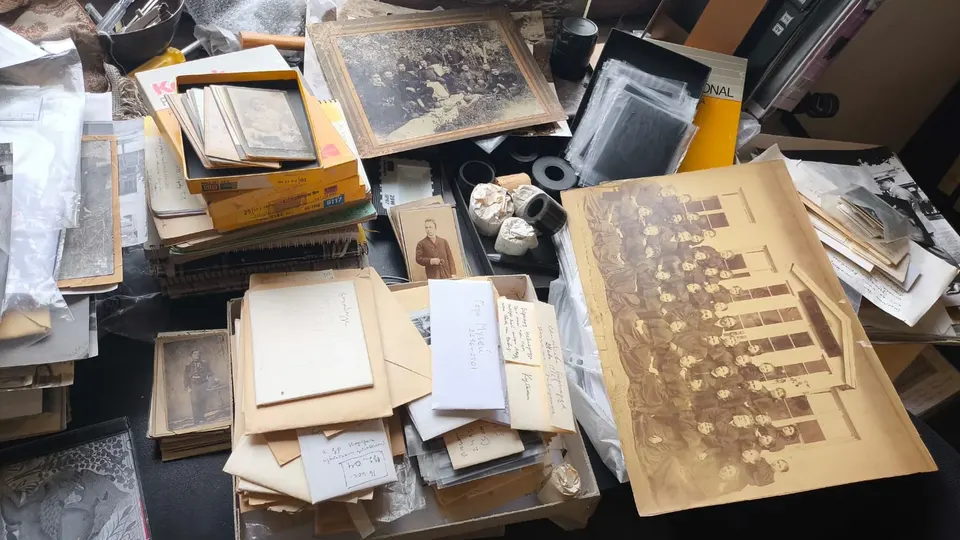
A database built around the museum’s photographs: separate records for photographs, photographers, places, collections, themes, featured projects and curators; Georgian and English throughout; dates with their certainty; rights in every record, including whether commercial use is allowed. A bridge publishes it to photomuseum.ge, and the weekly video series is made from the same records. With the museum’s association we also prepared two grant applications: the European Heritage Hub (submitted September 2026, decision pending) and the UCLA MEAP Cohort 9 preliminary application (submitted November 2026).
Read the Photomuseum case studyThe same approach fits
Libraries and archives of every kind, property listings, product and parts catalogues, directories and portfolios: anything kept as a set of similar items that people need to find.
Our built example so far is the Photomuseum. For other catalogues we start with a review of your items and data.
How we work
- 1
Consultation
Free, 10–15 minutes
Tell us what you keep and where it lives today. We tell you honestly whether a database makes sense.
- 2
Schema review
We map your items, their fields, links, rights and languages, and you approve the structure.
- 3
Build
The database, the editor and the bridge to your website, tested on real records.
- 4
Move in
We import what you have, train your team and stay on for support if you want. Scoped individually.
Start with a free consultation
10–15 minutes about what you keep and how people should find it. We tell you whether a structured database makes sense and what it would take.
AI Insider Georgia · Based in Tbilisi.