
A working publishing system for Georgia’s photographic heritage
AI Insider built the photomuseum infrastructure that publishes this collection, and continues developing it.
Watch the 46-second walkthrough ↓
The context
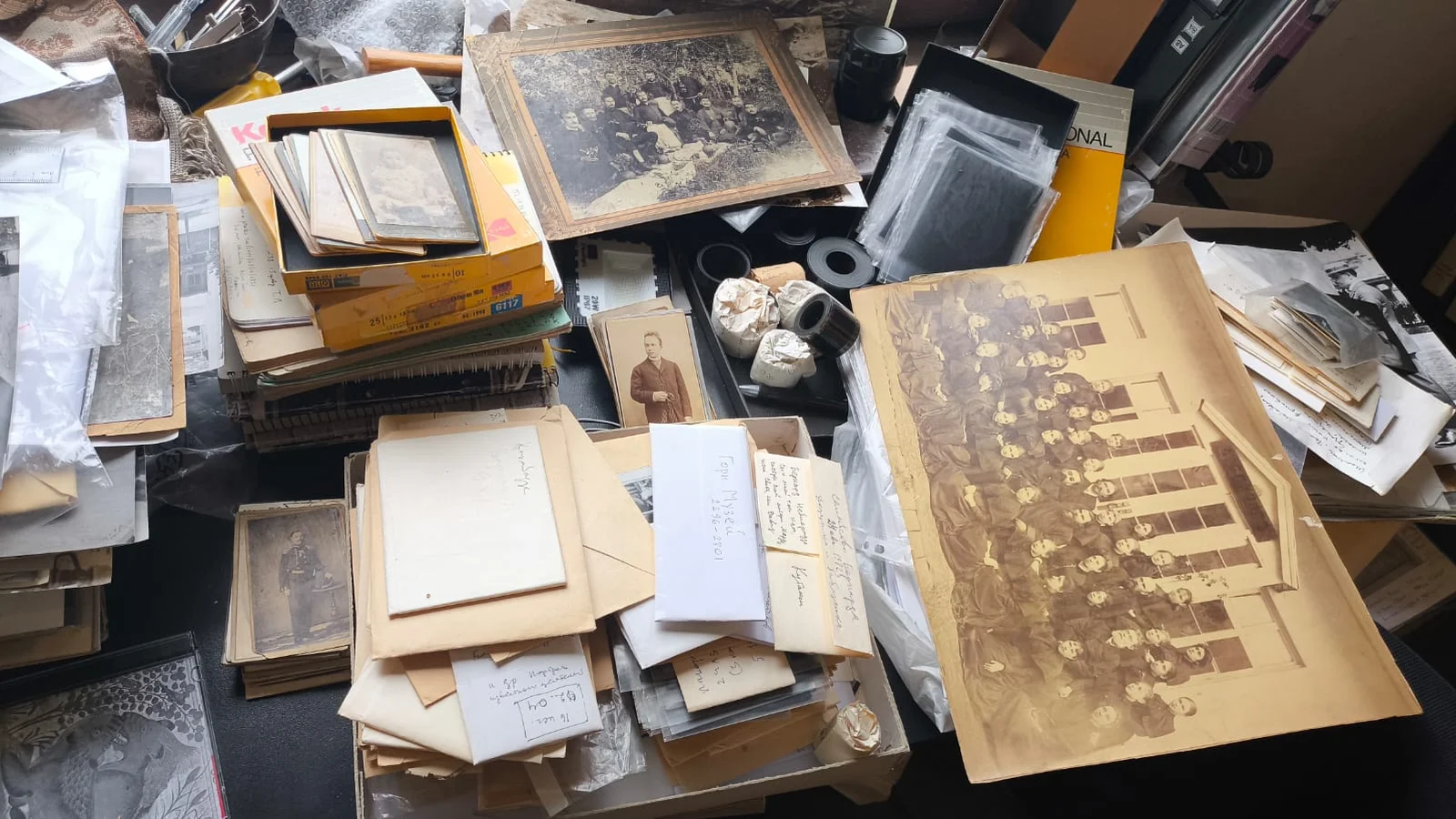
Giorgi Gersamia was a cinematographer whose lifetime of collecting, documenting and digitizing Georgian photographic history built the foundation this archive rests on. Part of that work was photomuseum.org.ge, the legacy website that presented selected material from the archive to the public.
AI Insider built the next layer on top of that foundation — a working platform that we continue developing at photomuseum.ge.
The problem
The photographs existed. What the archive lacked was structure, in three places:
- A scan is a file, not an archive. Each photograph needed a record: who is in it, where and when it was taken, which theme and which collection it belongs to.
- The archive could only be browsed by photographer. Photographs of Kutaisi sat across the work of Ermakov, Roinashvili, Barkanov, Engel and others, with no way to bring them together.
- Two languages, one source. Every record had to publish in Georgian and English without being built twice.
The solution and architecture
The platform runs on two layers, working together to hold the archive's records and present them to the public.
Sanity — archive backend
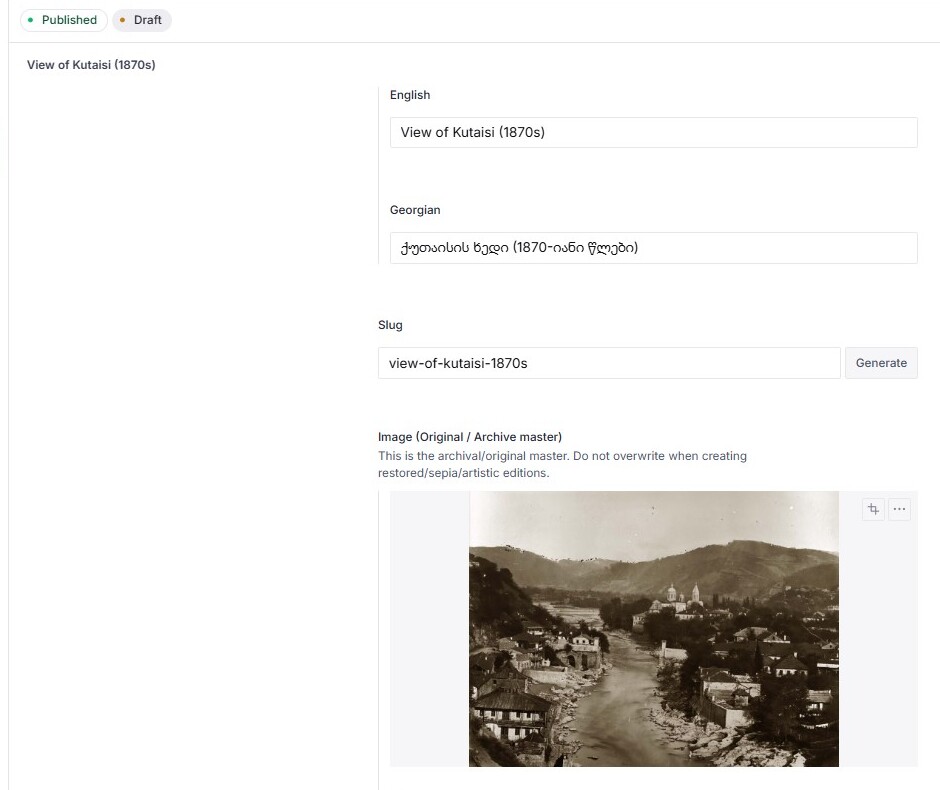
Holds the archive's structured photograph records and metadata — the system of record for the collection.
WordPress — presentation layer
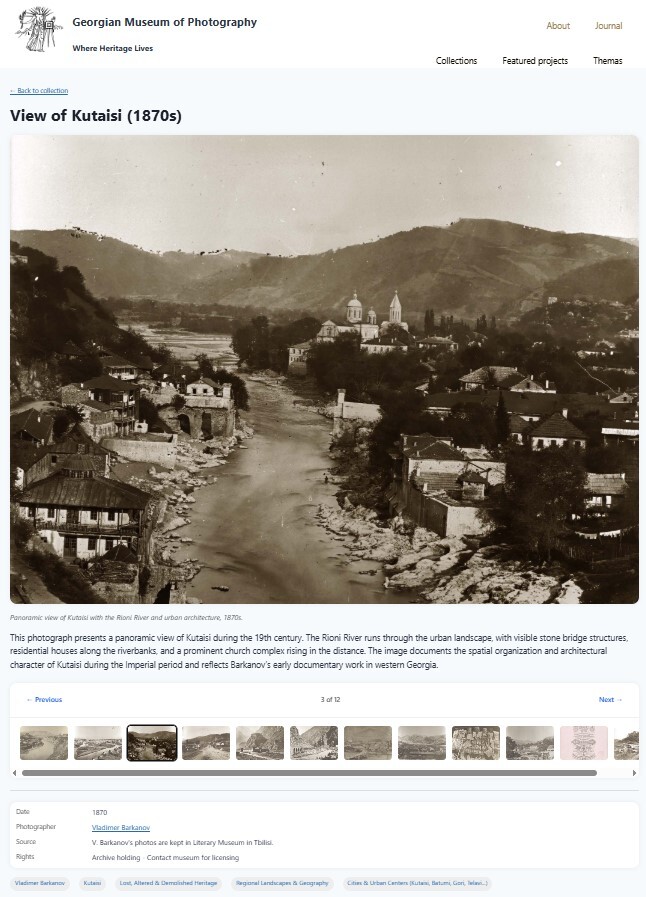
Publishes what's held in Sanity as a browsable public site, in Georgian and English.
From archive record to public page
 Click to enlarge
  Click to enlarge
 The same photograph record, "View of Kutaisi (1870s)" — shown as it's held in Sanity next to the same record as the public sees it on photomuseum.ge. Click either image to view it at full size, or see the live page on photomuseum.ge.
AI assistance is used directly on the archive's content: drafting descriptions and metadata, translating them, and producing captions, stories and short video content built around the collection.
Separating the structured backend from the public site lets the platform grow without every addition requiring the site itself to be rebuilt.
The operational workflow
- Records held in Sanity
- AI-assisted content production
- Publication via WordPress
These are active, ongoing capabilities, not a one-time migration — the order photographs move through them isn't fixed or automated. A person reviews AI-assisted output before it's published: the AI drafts, people decide what goes live.
Results and next phase
What's live today
- Maintaining structured photograph records in Sanity
- Browsing published photographs in Georgian and English on photomuseum.ge
- Publishing editorial material — captions, stories and video — around the collection
- Exploring the archive by subject through Themes and curated Featured projects
Digitizing the wider collection is separate, ongoing work that continues alongside the platform — the platform is built to keep pace with it, not to replace it.
Platform walkthrough: themes and featured projects
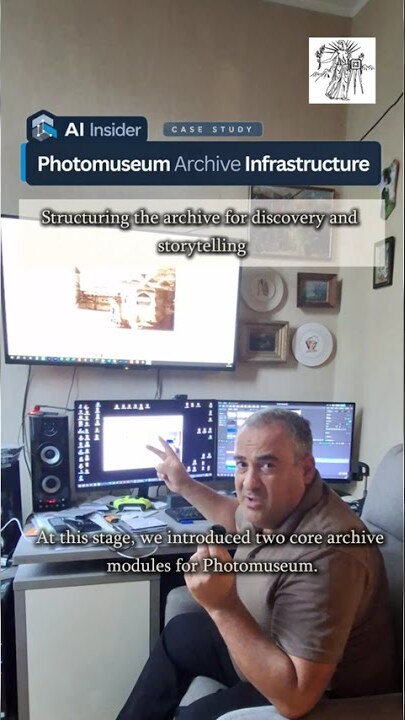
A walkthrough of thematic browsing and featured projects, both now live on photomuseum.ge.
Watch on YouTubeRead the series: Scanning is not digitization · The photographs existed. The connections didn't. · Short videos on YouTube
Services used
- Content & Publishing SystemsStructured records, AI-assisted drafting and translation, human review, bilingual publishing
- Websites & Multilingual InfrastructureThe WordPress presentation layer in Georgian and English
Start with a fixed-price System Audit
$300. A technical architecture review, bottleneck analysis and a prioritised roadmap, then implementation scoped to what the audit finds.
AI Insider Georgia · Based in Tbilisi.