One photograph a week: a video pipeline for a museum archive
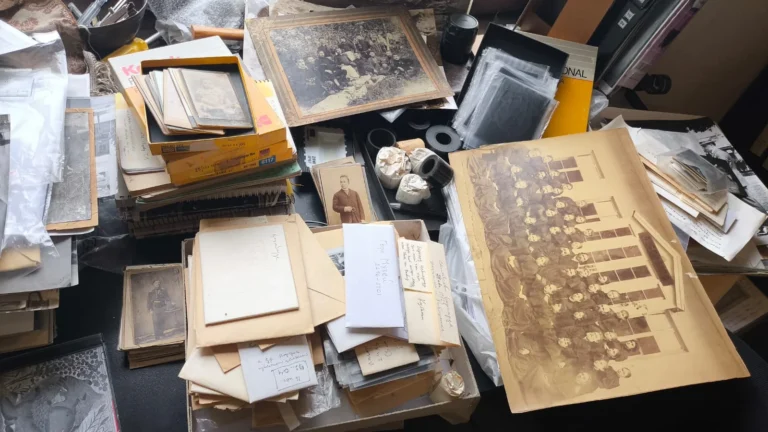
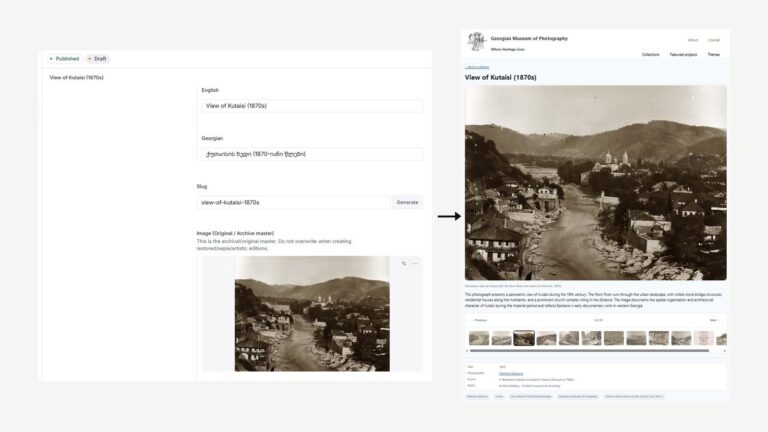
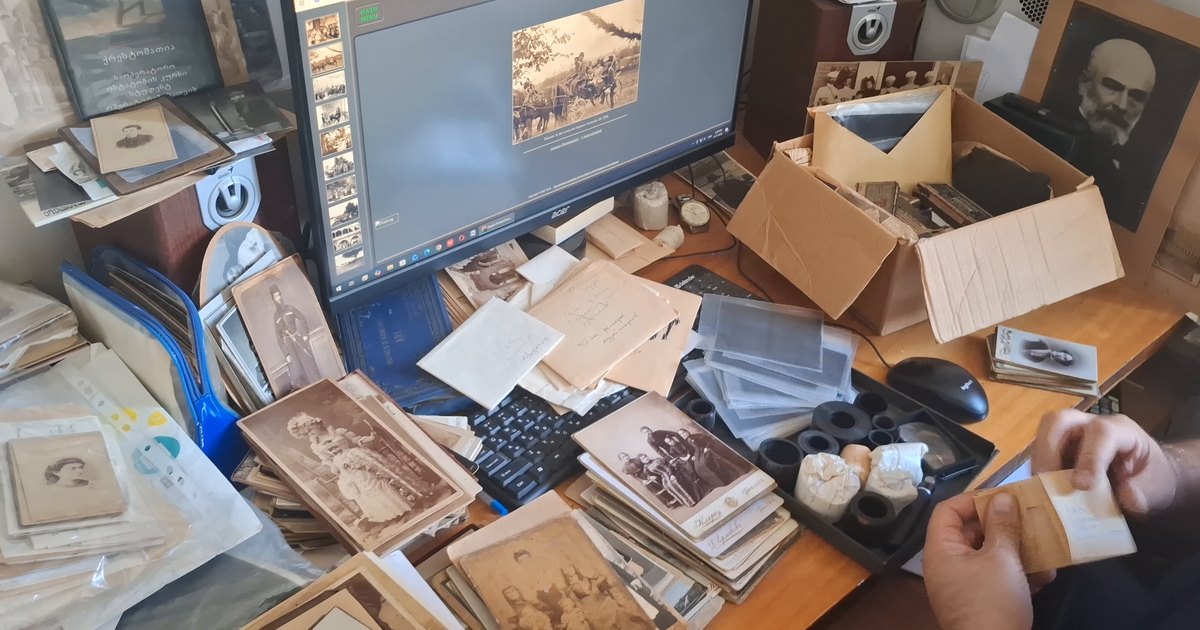
The Georgian Museum of Photography has an archive of 10,000+ digitized images, and each photograph now has its own structured record. The museum’s next step is to tell the stories in those photographs regularly: one photograph a week, with its story, as a short video in the series One Photograph, One Story on the museum’s YouTube channel.
A weekly video is not mainly a filming problem. It is a production problem. Every week someone has to write the narration, record the voice, cut a vertical video, add subtitles, write the text for each platform and publish it, and none of it may drift from what the archive record says.
What we built
We built the production system on Claude Code. It works from the photograph’s record and covers the steps from editing to publishing: the vertical edit, the narration, subtitles timed to the voice, and the description for each platform. People stay in charge of what matters: which photograph is told, which facts are used, whether the rights allow it, and whether the video is published.
Two test videos, two approaches
Both videos below were made with the same system. The difference is how far AI goes into the picture itself.
Where we stand
In our view, in a museum AI should serve the technical work and the presentation. We favour the original photographs, and animation only when the museum asks for it. A photograph that has survived a hundred years does not need to move to be worth watching.
We have also asked the audience: which approach works better, and should the narration be Georgian or English? The answers will shape the museum’s next videos.
What happens next
The video system is built. Refining the direction, setting the video standard and choosing the photographs and stories is now the museum team’s work, and the standard they set goes back into the system.
The same approach works wherever material already exists but rarely gets published: project photography, case work, product records. This is what we build as Content & Publishing Systems. The full background is in the Photomuseum case study.
More in this series
- Scanning is not digitization
- The photographs existed. The connections didn’t.
- One Photograph, One Story: the full series on the museum’s YouTube channel