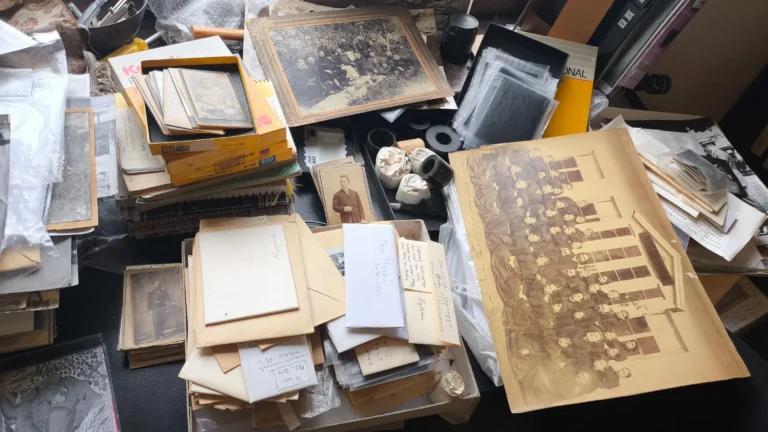
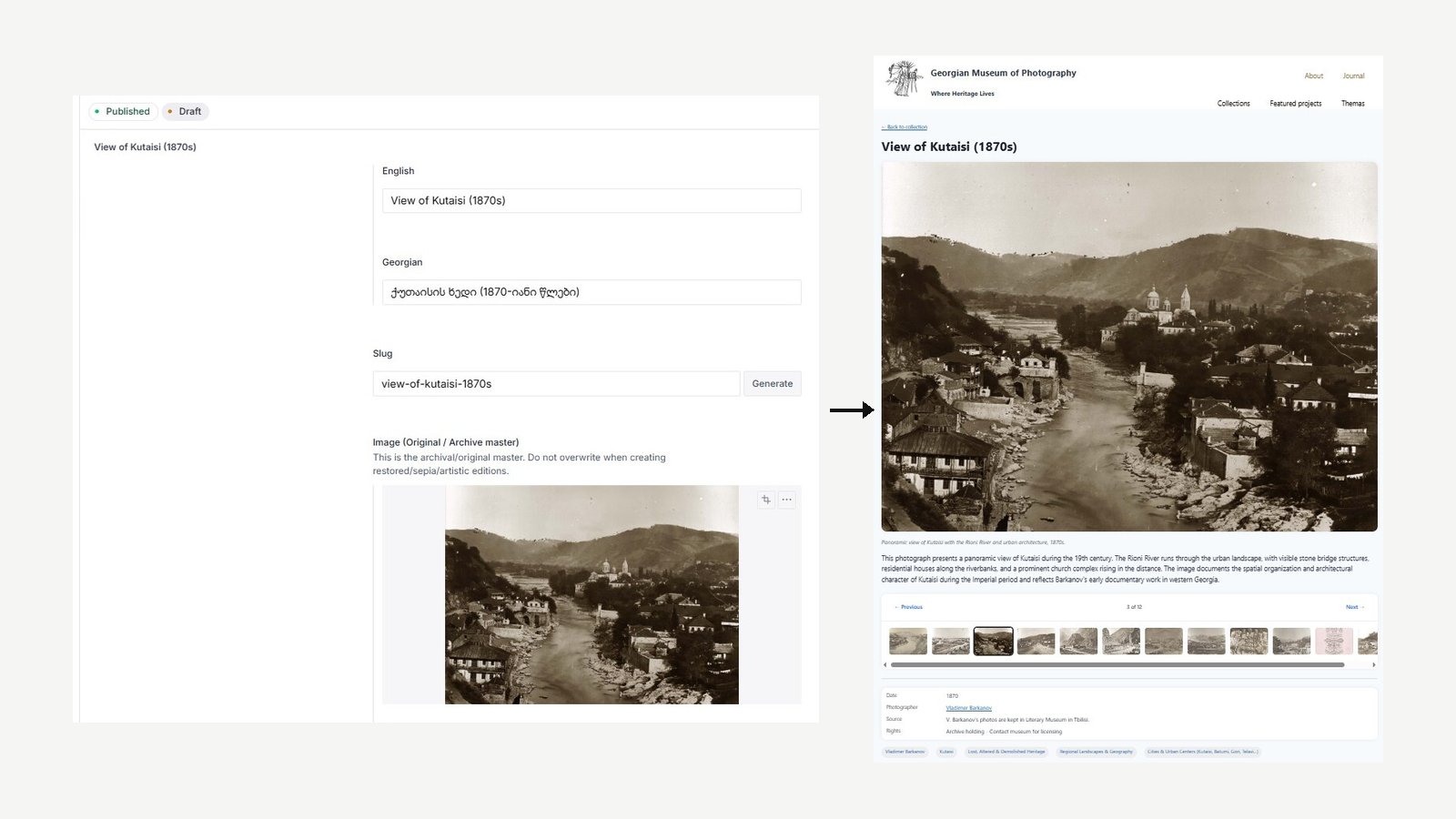
The photographs existed. The connections didn’t.
Organising a photo archive by photographer works until someone searches by subject. While rebuilding the Georgian Museum of Photography archive, we found exactly that problem, and it had nothing to do with missing content.
The material was organised around photographers and collections. That works if you know whose work you are looking for. It fails the moment your question is about a place, an event or a person.
Try finding Kutaisi
Suppose you want to explore Kutaisi. Relevant photographs exist across the work of Ermakov, Roinashvili, Barkanov, Engel and others. Each sits in its own collection, and there was no simple way to bring them together.
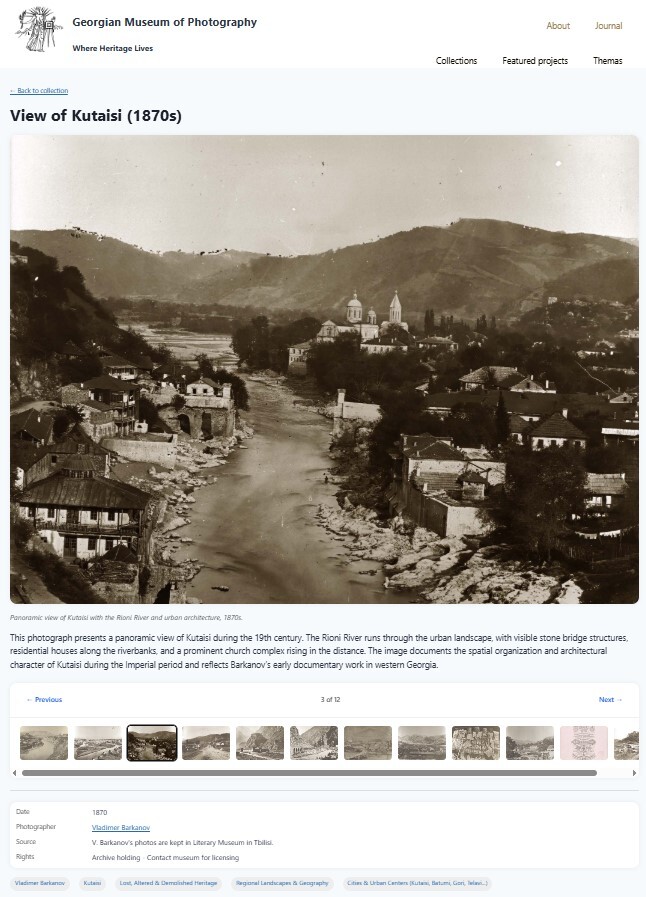
The same was true for historical events, public figures, traditional Georgian clothing and many other subjects. The content wasn’t missing. The connection between the content was.
An information architecture problem, not a content problem
For us this became a design question: how do you turn separate collections into a system that can also be explored by theme, without breaking the structure that already works?
The answer was to keep collections as they are and add two new ways in:
- Themes organise archive material by subject: a place, an event, a kind of object. A photograph stays in its collection and can also belong to a theme.
- Featured Projects connect material from different collections into curated stories.
Both modules are live on photomuseum.ge. You can explore Themes and Featured projects there.
Why it is worth the work
A better browsing experience is part of it. The larger goal is discovery, context and storytelling: a visitor can follow a subject across a century of photographers, and every theme becomes material ready to publish, whether that is a page, an article or a short video.
It is a small interface change that reflects a bigger shift: from stored material to media infrastructure.
If your material can only be browsed one way
Most organisations file things the way they were produced: by client, by year, by project. Their audiences search by need: by type of building, by problem, by place. If your portfolio, catalogue or knowledge base can only be browsed the way it was filed, ask which second route your audience would actually use, and whether your records hold enough information to support it.
That second route is part of what we design in Content & Publishing Systems. Full background is in the Photomuseum case study, and the previous article in this series explains why scanning is not digitization.